
TrustCloud Sign
A comprehensive electronic signature service covering all the market’s needs
Part of the TrustCloud platform. Pilot, our Decision AI, decides which type of signature each transaction needs, per transaction.

TrustCloud Sign functionalities
Thanks to TrustCloud, any company is able to securely sign digital documents and use all the electronic signature solutions (simple, advanced, qualified and biometric), being able to launch for each transaction a signature typology and even several simultaneously.
TrustCloud E-Sign is a qualified service in charge of managing the signature process from beginning to end, combining it with other secure digital transactions such as the signer’s identification or the validation of his identity document.
Generating the signature
Signature Control
Management of the company’s events
Sending and Control of OTP
Compilation of the evidence in the signature process
Signatures embedded in documents.
Document generation with the necessary stamps and signatures.
Generation of Certificate of Evidence
About eIDAS
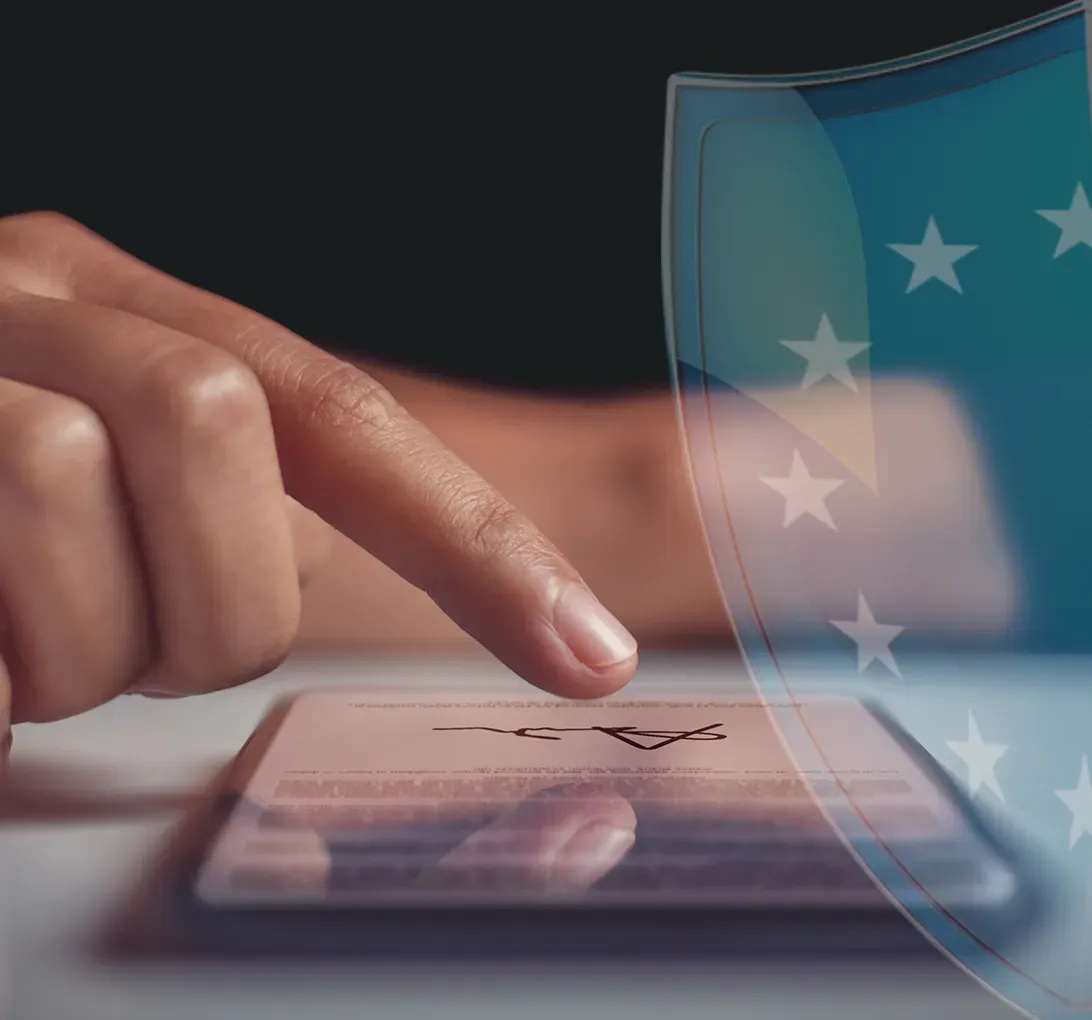
Considering the importance of secure digital transactions within the current and global economic system, and with the aim of promoting a single common digital market and establishing a Community legal framework for the use of electronic signatures and other trusted services, Regulation 910/2014 of the European Parliament and of the Council of 23 July 2014 on electronic identification and trusted services for electronic transactions in the internal market (“Regulation eIDAS“) was adopted, creating a secure and reliable virtual environment for all European citizens for their electronic transactions.
This standard is fully applicable in all the State Members of the European Union since July 2016, repealing both the previous Directive 1999/93/EC on electronic signatures and those national laws and regulations whose content is contrary to the provisions of eIDAS.
Difference between Digital, Electronic and Biometric Signature
Digital Signature
Electronic Signature
Biometric Signature
On the other hand, the biometric signature is a type of digital signature that makes use of the physical intrinsic features of the signatory (fingerprint, iris, trace used when signing with a digital pencil…) to create the signature’s image/graph and proceed to its identification.
The biometric signature is a technology that allows capturing the image of the handwritten signature through digital tablets with the biometric data of the signatory: speed, writing acceleration, pressure, inflections, direction changes and pencil movement.
These characteristics identify the signatory uniquely as these are features that are inherent to the person and allow each individual to authenticate uniquely.

Benefits of Biometric Signature

By being able to dispense with paper, inks, printers and other drawing materials, companies will be able to generate greater savings and a more positive impact on the environment. Also, signature documents, being digital, can be exchanged and processed remotely, without wasting time and travels for meetings.
In addition, biometric signature technology has the following advantages:
FAQS
What is the difference between e-signature and electronic signature?
They are both the same. Just as the term e-mail designates the exchange of electronic mail, e-signature is a way of naming the electronic signature. In effect, it is a legal way of obtaining reliable consent or approval on electronic documents or forms.
Are all types of electronic signatures equally secure?
No. While the simple type cannot always guarantee who has made the signature (since it does not offer sufficient data to prove the identity of the real signatory), the advanced and qualified electronic signature can prove it, and generate other data of probative value that ensure the authenticity and intentionality of the electronic signature. In addition, the qualified signature with a qualified certificate depends on a physical object that contains the source for electronic signature, and which is under the control of its holder after identification in person at a public certification authority. An example of qualified signature with qualified certificate would be to sign electronically through the chip contained in some ID cards, which can only be accessed with a suitable card reader (HSM).
Which electronic signature is best to use?
It depends on the use case, the security that needs to be obtained and the usability that is wanted to be offered, since a more secure electronic signature implies a more complex user experience. For example, the acceptance of conditions of an online purchase is usually done by simple signature with a checkbox, since it is not necessary to know who is buying. On the other way, online procedures with Public Administrations require a qualified signature, since it is very important to know which citizen is requesting and executing the procedure, and if he/she really intends to do it.
contact@trustcloud.tech
Contact Us
Shielded Framework Certifications

ISO 27001

ISO 17068

ISO 22301

ISO 27018

ISO 27017

ISO 27701

ISO 30107

ISO 22316

CFR21

PSC-2019/0001
Compliance
ETSI-PSC-2023/0001
Compliance
ENS-2023/0005
Compliance
SOC 2

eIDAS Compliant
Trust Services
CSA
Cloud Security Alliance
FedRAMP

HIPAA

NIST 800-63
NIST 800-171


Nuremberg Code Compliant